

High Incident Energy Solutions That Work

An arc flash label showing extreme calories is not just a documentation problem. It is a warning that normal tasks may require burdensome PPE, restricted work practices, or a deeper review of how the electrical system is configured. That is why high incident energy solutions matter. They help facilities move from identifying a severe hazard to reducing it in ways that support worker safety, maintenance practicality, and compliance.
For many plants, the issue appears after an arc flash study is updated. A switchboard, MCC, panel, or industrial control enclosure comes back with incident energy levels that make energized work difficult to justify and harder to manage. In some cases, the label reveals a condition that has existed for years. In others, system changes, utility upgrades, or protective device settings have increased the hazard over time. Either way, the next step should not be guesswork.
What high incident energy solutions are really addressing
High incident energy is usually the result of one or both of two conditions - available fault current is high, clearing time is too long, or both. The practical goal is to reduce the energy a worker could be exposed to during an arc flash event. That sounds straightforward, but the path depends on the equipment design, the protection scheme, the operating mode, and the work that must actually be performed.
This is where facilities can make costly mistakes. Some focus only on PPE. PPE is necessary, but it is not the same as hazard reduction. Others rush to change settings without confirming selective coordination, equipment ratings, or process impacts. A better approach is to evaluate the hazard at the system level and then apply controls that are technically sound and operationally realistic.
Common high incident energy solutions in the field
No single fix works everywhere. The right strategy depends on whether the problem is tied to a main breaker, feeder device, transformer relationship, motor contribution, utility source strength, or maintenance practice.
One common solution is reducing protective device clearing time. If an upstream breaker takes too long to trip in the arcing current range, incident energy rises quickly. Adjusting settings, where permitted, can help, especially when done through a formal coordination and arc flash review. The trade-off is that tighter settings may affect nuisance tripping or coordination with downstream devices. That is why engineering review matters.
Another option is a maintenance switching scheme or maintenance mode on a breaker. This allows a lower instantaneous setting during periods when energized interaction is required. It can be very effective, particularly on equipment where normal settings are needed for coordination but temporary hazard reduction is also necessary. The limitation is procedural discipline. If maintenance mode exists but workers are not trained to use it correctly, the benefit is lost.
Differential relaying can also reduce clearing time significantly. On larger systems or critical equipment, zone-selective interlocking and differential protection often provide a more refined response than simple setting changes. These approaches can lower incident energy while preserving system performance, but they involve design cost, installation complexity, and commissioning effort.
For some facilities, current-limiting devices are part of the answer. Current-limiting fuses or other current-limiting protective methods can reduce the magnitude and duration of fault energy under the right conditions. However, they are not a universal remedy. Their effectiveness depends heavily on available fault current and where the equipment operates on the device curve.
Transformer changes and system reconfiguration may also be considered. A transformer impedance change, bus split, or source isolation strategy can alter fault current and protection behavior. These are more structural solutions and often make sense during expansions, retrofits, or major capital projects. They are usually less attractive as a quick correction unless the existing configuration is already creating maintenance or reliability problems.
Why labels are part of the solution, not just the record
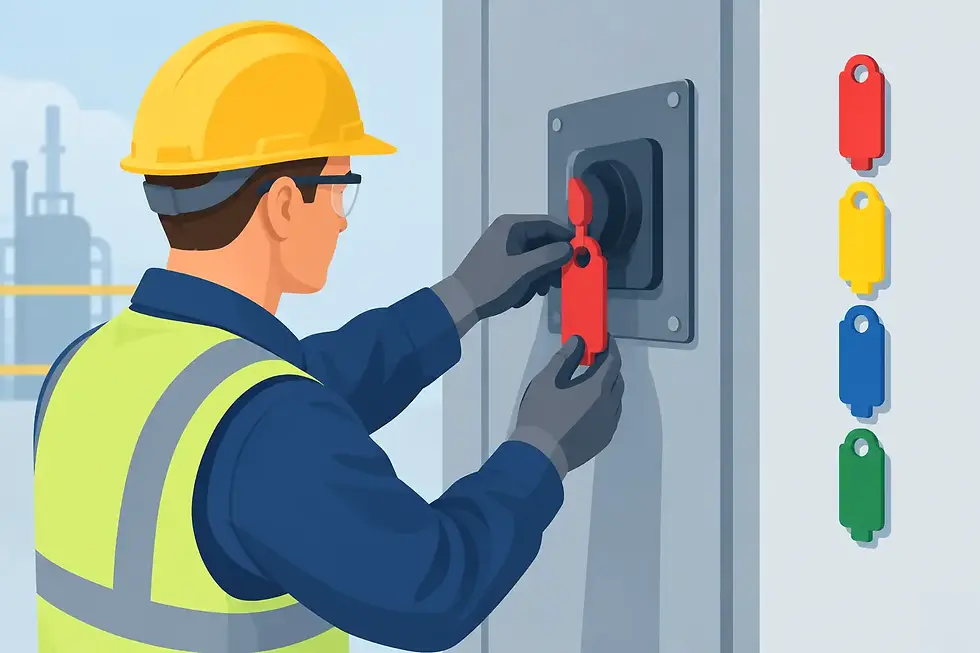
Once a hazard is identified, equipment labeling becomes a point-of-use control. In high incident energy conditions, the label must do more than satisfy a paperwork requirement. It needs to communicate the hazard clearly enough that qualified persons can make safe decisions before opening or interacting with equipment.
That means the label has to remain legible in heat, dirt, washdown, UV exposure, and industrial wear. If a label fades, peels, or becomes unreadable, the safety program weakens at the exact point where workers need accurate information. Durable arc flash and equipment labels are not separate from compliance. They are part of how compliance is carried out in the field.
Label content also has to match the current study and the actual equipment condition. A well-made label with outdated data can create false confidence. When incident energy remediation changes settings, protection methods, or required PPE, labels need to be updated as part of the implementation process.
Engineering review comes before remediation
The most effective high incident energy solutions begin with accurate system data. If the one-line diagram is outdated, the overcurrent device data is incomplete, or field conditions do not match the model, the study results may point the team in the wrong direction.
A proper review typically looks at utility contribution, transformer characteristics, conductor lengths, protective device types and settings, motor loads, and operating scenarios. It should also account for how the facility actually works. A theoretically lower incident energy result is not very useful if it depends on a mode that operations will not maintain or a setting that compromises uptime in a critical process.
Facilities also need to distinguish between equipment that can be remediated and equipment that may need replacement planning. Older gear often limits what can be changed safely. If the breaker cannot support a new trip unit, if spare parts are no longer reliable, or if short-circuit ratings are already a concern, remediation may become a bridge to a larger modernization decision.
Compliance is broader than the study report
NFPA 70E expects employers to assess electrical hazards, establish safe work practices, and provide field-applied labels where required. OSHA expectations around worker protection and hazard communication reinforce the same basic obligation. A completed study report does not close that gap on its own.
Workers need training that explains what the labels mean, what tasks are permitted, when energized work is prohibited or restricted, and how shock and arc flash boundaries affect the job. Supervisors need procedures that align with the engineering assumptions. Maintenance teams need to know when settings changed and why. If a facility installs a remediation measure but does not build it into training and documentation, the control may exist on paper and fail in practice.
This is where a practical compliance partner can help connect the pieces - study support, remediation planning, durable labeling, training, and program documents. ZMAC Safety Labels operates in that space because high-risk electrical safety programs do not succeed through labels alone or engineering alone. They work when both are aligned.
How to prioritize high incident energy solutions
The first priority is equipment with the highest exposure and the most frequent interaction. A piece of gear with severe incident energy and regular troubleshooting activity deserves faster attention than equipment that is rarely accessed. The second priority is equipment where remediation is achievable without creating larger system problems. Quick wins matter, but they should still be engineered.
It also helps to separate temporary controls from permanent ones. Enhanced PPE requirements, barricades, administrative restrictions, and energized work limitations may be necessary immediately. But those measures should not become an excuse to postpone corrective action where a feasible engineering solution exists.
Budget is always part of the conversation. Some fixes can be implemented through settings and updated procedures. Others require relay upgrades, breaker modifications, or equipment replacement. The right decision is not always the cheapest one up front. If a lower-cost option leaves workers exposed to extreme PPE burdens and recurring operational constraints, it may cost more over the life of the equipment.
The practical standard for success
A good result is not simply a lower calorie number on a report. It is a system where qualified workers can identify hazards clearly, follow documented procedures, rely on accurate durable labels, and perform necessary tasks under controls that make sense for the facility.
Some high incident energy solutions produce dramatic reductions. Others only improve conditions enough to make work planning more manageable. Both outcomes can be valid if they are based on sound engineering and integrated into the site safety program.
The most useful next step is usually not a product purchase or a rushed retrofit. It is a clear review of the equipment, the study inputs, the protection strategy, and the field labeling so the hazard is addressed where it actually exists - at the equipment, in the procedure, and in the decisions workers make before contact with energized systems.


Comments