

Incident Energy Reduction Guide for Safer Equipment

An arc flash label reporting 35 cal/cm² is not merely a PPE selection problem. It is a warning that a worker may be exposed to catastrophic thermal energy if an arcing fault occurs. This incident energy reduction guide focuses on the controls that change the hazard at its source: system design, protective-device performance, equipment condition, work practices, and durable hazard communication.
Incident energy is calculated at a defined working distance for a specific electrical configuration and clearing time. When available fault current, arcing current, enclosure characteristics, working distance, or protective-device clearing time changes, the result can change. A reduction effort must therefore begin with current, accurate electrical system data rather than assumptions based on an old study or a label that no longer reflects field conditions.
Start With a Verified Arc Flash Baseline
A valid arc flash study establishes where high incident energy exists and why. The analysis should be supported by a current one-line diagram, verified equipment ratings, transformer information, conductor data, available utility fault current, and the actual settings and condition of overcurrent protective devices.
Field verification matters. A breaker setting recorded in a coordination study may not match the setting in the field. A feeder may have been extended, a transformer replaced, or a tie breaker normally operated in a different position than assumed. Any of these changes can affect fault current or clearing time. If the study inputs are wrong, the calculated incident energy and the labels derived from it may be wrong as well.
Review the study for locations with elevated incident energy, but do not stop at the final calorie value. Identify the governing protective device, the calculated arcing current, the clearing time, the equipment class, and the operating scenario. A 20 cal/cm² result caused by a slow upstream breaker calls for a different solution than a similar result caused by a transformer secondary with high available fault current.
Treat Labels as Field Communication, Not the Engineering Study
Arc flash labels communicate the hazard at the point of use. Under NFPA 70E, equipment labeling supports the risk assessment process by providing information such as nominal system voltage, arc flash boundary, and available incident energy or PPE category, as applicable to the chosen labeling method.
Labels do not reduce incident energy by themselves. They help workers recognize the hazard and select appropriate controls before opening or interacting with energized equipment. Labels must be legible, durable, attached to the correct equipment, and updated when the electrical system or study assumptions change. Paper labels, faded print, and incomplete data undermine a safety program when the information is needed most.
Reduce Clearing Time First When It Is Feasible
For many systems, clearing time is the most practical lever for incident energy reduction. The longer an arcing fault remains energized, the more thermal energy a worker may receive. Reducing fault duration often produces meaningful results without replacing major sections of distribution equipment.
Protective-device coordination must be reviewed before changing settings. Lowering a trip setting or shortening a delay can improve arc flash performance, but it can also create nuisance trips or compromise selective coordination. The correct objective is not simply the fastest possible trip. It is the fastest clearing time that protects people while preserving appropriate coordination, equipment protection, and operational reliability.
Common engineering options include adjusting instantaneous or short-time settings, using zone-selective interlocking, applying differential protection, and replacing a protective device with one that has more suitable trip capabilities. The appropriate choice depends on the system voltage, available fault current, device capabilities, process criticality, and the required level of coordination.
Maintenance is part of this control. A breaker that fails to operate within its expected time invalidates the assumptions used in the arc flash analysis. Testing, inspection, calibration, lubrication where applicable, and documentation should follow manufacturer guidance and the facility's electrical maintenance program. Protective devices that are neglected, damaged, or improperly set can turn a calculated condition into a more severe real-world event.
Use Arc Flash Detection Where Fast Clearing Is Needed
High-speed arc flash detection systems can reduce arcing duration by detecting the light of an arc, usually in combination with an overcurrent signal, and sending a trip command to the upstream protective device. These systems are particularly valuable where conventional overcurrent protection cannot clear quickly enough without sacrificing coordination.
The benefit is significant, but the application must be engineered. Detection coverage, sensor placement, relay logic, trip paths, breaker operating time, and maintenance requirements all affect performance. A system that detects an event quickly but relies on a poorly maintained breaker may not deliver the expected reduction.
Arc flash relays and optical detection are often considered for switchgear, motor control centers, and other equipment where personnel may interact with energized compartments. They are not a substitute for an electrically safe work condition. They are a risk-reduction measure for the limited circumstances where energized interaction is justified and necessary.
Consider Equipment and System Design Changes
Some high-energy conditions cannot be solved through settings alone. In those cases, equipment modifications or changes to the system configuration may be necessary.
Current-limiting fuses can reduce let-through energy in suitable applications. Arc-resistant equipment can direct energy away from personnel when installed, maintained, and used according to its design requirements. Remote racking and remote operation can move workers outside the arc flash boundary for certain tasks. High-resistance grounding may reduce damage and arc flash exposure in appropriate low-voltage systems, although it requires a deliberate ground-fault detection and response program.
Other options include reducing transformer size where loads permit, splitting a large bus into smaller sections, changing the normal tie-breaker operating position, or relocating equipment so routine operation does not require exposure at the equipment face. Each option has trade-offs. Reducing available fault current can also affect protective-device operation. Operating systems split rather than tied may reduce incident energy but affect reliability and backup power strategies. Engineering review is required before implementing any configuration change.
Do Not Ignore Equipment Condition
Incident energy calculations model expected system behavior. Poor equipment condition introduces uncertainty that the model may not capture. Loose connections, contamination, damaged insulation, deteriorated bus supports, missing barriers, and improperly installed components increase the likelihood of faults and can worsen their consequences.
An effective reduction program includes infrared inspections where appropriate, cleaning schedules, torque verification, enclosure integrity checks, and correction of abnormal heat, noise, odor, corrosion, or tracking. Equipment must also be used within its marked ratings. A worker should never assume that a panel, disconnect, or switchboard is safe to operate simply because it has an arc flash label.
Reduce Exposure Through Work Planning
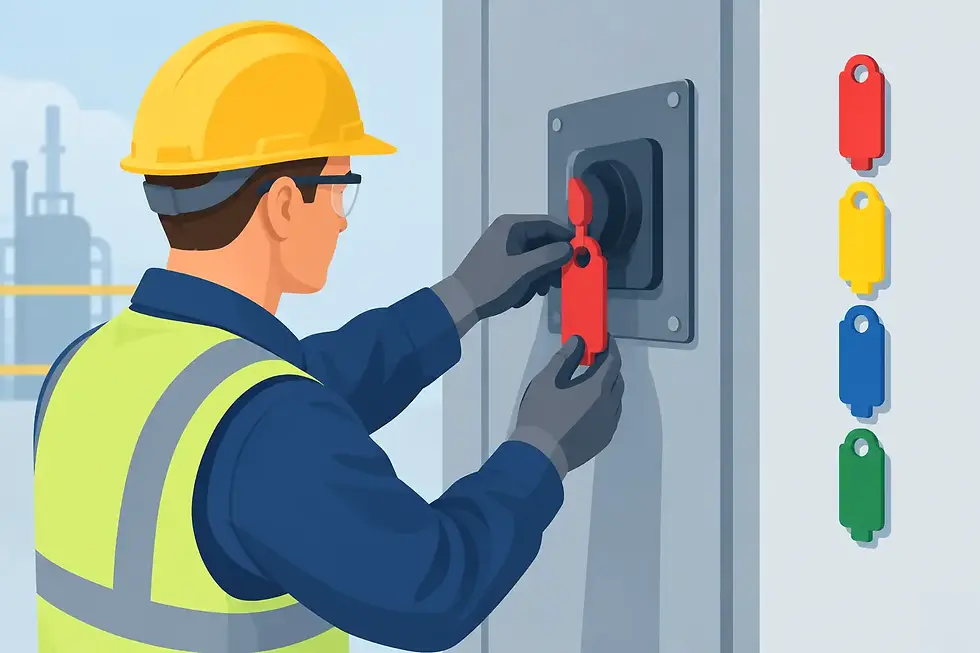
The hierarchy of risk control still applies. The preferred strategy is to establish an electrically safe work condition by de-energizing, isolating, locking and tagging energy sources, verifying absence of voltage with properly rated test instruments, and addressing stored energy. PPE is essential when required, but it is not the primary method for reducing incident energy.
When energized work is permitted under NFPA 70E, the work must be justified, planned, and controlled. The energized electrical work permit process, where required, should identify the task, hazard, shock and arc flash boundaries, protective measures, qualified persons, and approval responsibilities. Routine tasks should be examined closely. If a task can be redesigned, performed remotely, or completed after shutdown, the facility can reduce both worker exposure and dependence on PPE.
Clear labeling supports these decisions. Mark electrical panels, disconnects, equipment identifiers, voltage ratings, source information, and lockout/tagout points so workers can isolate the right equipment without delay or ambiguity. Durable industrial labels are especially important in heat, moisture, chemical exposure, outdoor conditions, and high-traffic maintenance areas.
Keep the Reduction Program Current
Incident energy reduction is not a one-time remediation project. Electrical systems change through expansions, utility modifications, generator additions, equipment replacements, and maintenance setting changes. These changes should trigger a review of the arc flash study and associated labels. NFPA 70E requires review of arc flash risk assessment information at intervals not to exceed five years and when a change occurs that could affect the assessment.
Maintain a controlled process for updating one-lines, study data, settings records, label inventories, and training materials. The facility should be able to show that the label on a piece of equipment corresponds to the equipment configuration and protective-device settings in service. This is where engineering data, field verification, and durable hazard communication must work together.
A facility does not need to solve every high-energy location at once. Start with the equipment where workers have the greatest exposure, where incident energy exceeds site limits, or where maintenance findings indicate unreliable protective performance. Then make each improvement traceable: document the original condition, the engineering basis for the change, the final settings, the revised incident energy, and the new label. That discipline turns arc flash reduction from a study deliverable into a safer operating standard.


Comments