

Lockout Tags Versus Padlocks: Which Do You Need?

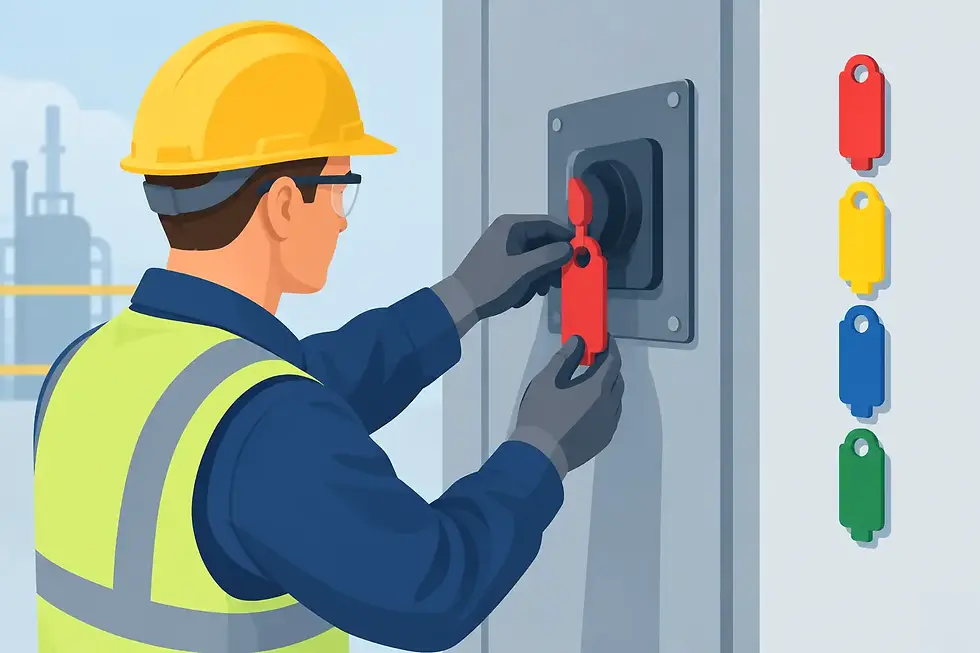
A maintenance employee opens a motor disconnect, applies a personal padlock, and attaches a completed tag. That combination communicates two different but equally necessary controls. When teams frame lockout tags versus padlocks as an either-or decision, they can miss the point of a properly designed lockout/tagout program: the lock restrains hazardous energy, while the tag communicates who placed the control and why.
For facilities managing electrical distribution, mechanical equipment, process lines, and other energy sources, confusing these functions can create an avoidable exposure. OSHA’s control of hazardous energy standard, 29 CFR 1910.147, establishes specific requirements for lockout and tagout. NFPA 70E also addresses the establishment of an electrically safe work condition for electrical hazards. The equipment, procedures, training, and durable identification used at the point of work all need to support those requirements.
Lockout Tags Versus Padlocks: The Core Difference
A lockout padlock is a physical restraint device. It is applied to an energy-isolating device, such as a disconnect switch, circuit breaker, valve, or mechanical disconnect, to hold that device in the safe or off position. A properly applied lock prevents the isolating device from being operated until the person who applied the lock removes it under the employer’s established procedure.
A lockout tag is a prominent warning device. It identifies that equipment must not be operated and provides information about the authorized employee who applied it. A tag generally includes the employee’s name, department or contact information, date, and the reason for the lockout. Depending on the program, it may also identify the work order, equipment, shift, or expected completion time.
The practical distinction is direct: a padlock provides restraint; a tag provides warning and accountability. A tag does not physically prevent someone from moving a disconnect handle, opening a valve, or reenergizing equipment. That is why OSHA generally requires lockout when an energy-isolating device is capable of being locked out.
Why Tags Are Normally Used With Locks
A personal lock without clear identification can slow down operations and create risk during a shift change, emergency response, or maintenance coordination. Supervisors need to know who owns the lock and whether the associated work is complete. Other employees need immediate, unambiguous direction not to operate the equipment.
The tag supplies that information. It turns a physical restraint into a visible part of a controlled work process. For electrical work, this matters at disconnects, breakers, control panels, and equipment fed from multiple sources. A worker may have isolated one source while another source remains present through a generator, photovoltaic system, stored energy device, backfeed path, or separate feeder. The tag supports communication, but it never replaces verification of isolation and absence of voltage where required.
Tags should be legible, durable, standardized, and suited to the environment where they will be used. Paper tags that tear, fade, smear, or detach in heat, moisture, oil, ultraviolet exposure, or washdown conditions weaken the warning at the exact time it is needed. Durable non-paper lockout/tagout labels and tags help keep instructions and employee information visible throughout the work.
What a Lockout Tag Should Communicate
A tag should immediately tell a worker that the equipment is under a hazardous-energy control. OSHA requires tags to clearly communicate warnings such as Do Not Start, Do Not Open, Do Not Energize, or Do Not Operate. The wording should match the hazard and the controlled device.
Beyond the required warning, the tag should support your written procedure. In most facility programs, that means a clear identity field for the authorized employee and sufficient information for supervisors to manage lock removal, group lockout, and shift turnover without relying on memory or informal verbal updates.
Avoid vague or reusable markings that leave uncertainty about who is exposed. If a tag says only Out of Service, it may be appropriate for equipment condition control, but it does not necessarily establish a personal hazardous-energy lockout. Keep maintenance status, operational restrictions, and employee protection controls clearly differentiated.
When Tagout May Be Permitted Without a Padlock
Tagout-only is not simply a preference for facilities that do not have enough locks or hasps. Under OSHA 1910.147, tagout may be used when an energy-isolating device is not capable of being locked out, provided the employer can demonstrate that the tagout program provides full employee protection.
That is a higher bar than attaching a tag and instructing employees to be careful. OSHA requires additional safety measures when tagout is used without a lock. The specific measures depend on the equipment and hazard, but may include removing and isolating a circuit element, blocking a controlling switch, opening an extra disconnecting device, or otherwise providing a level of protection equivalent to lockout.
For electrical systems, a tag on a breaker or disconnect does not prove that the circuit is deenergized. Authorized employees must follow the site’s electrical safety program and applicable NFPA 70E practices to identify all sources, interrupt the load where necessary, open disconnecting means, release or restrain stored energy, apply lockout/tagout devices, and verify absence of voltage using appropriate test equipment and procedures.
Tagout-only procedures deserve careful engineering and procedural review. If a device can be modified or replaced to accept a lock, that may be the more dependable long-term solution. A facility should not allow legacy hardware to become a permanent reason for relying on a less protective control.
Selecting Padlocks and Tags for the Job
Lockout devices should be dedicated to safety lockout, identifiable, durable, standardized, and substantial enough to prevent removal without excessive force or unusual techniques. They should not be used as general-purpose security locks. Personal safety locks are typically keyed differently so one employee’s key cannot remove another employee’s lock.
Color can support a facility’s visual management system, but color alone must not carry the safety program. A red lock may signal personal lockout in one plant and mean something different in another. Written procedures, employee training, lock identification, and consistent device selection are what make the system dependable.
Tags require the same level of discipline. Select material and attachment methods for the actual field environment. Consider outdoor exposure, chemical contact, high temperatures, vibration, oil, dust, washdown, and the size of the lockout point. A tag that cannot be read or remains attached only by luck is not an effective warning device.
For group lockout, the system must ensure that every authorized employee maintains personal protection. A group lockout box, hasp, or comparable method can help coordinate isolation, but no employee should begin work until their personal lock is applied according to the established procedure. The tag information should also make responsibility clear across crews and shifts.
Build the Decision Into Your Written Procedures
The most effective lockout/tagout programs do not leave workers to decide, in the moment, whether a tag, lock, or additional device is necessary. Equipment-specific procedures should identify each energy source, the isolation point, the required lockout devices, stored-energy controls, verification steps, and release-from-lockout process.
Your program should also address situations that routinely produce errors: equipment with multiple disconnects, temporary generators, battery systems, control-power sources, contractor coordination, shift changes, and removal of a lock when the authorized employee is unavailable. These are not administrative details. They are conditions where unclear identification or inconsistent devices can lead to reenergization while someone remains exposed.
Periodic inspections required by OSHA provide a practical opportunity to find weaknesses. Review whether locks are being applied at the correct isolating devices, whether tags remain readable, whether employees understand tagout-only limitations, and whether procedures match equipment modifications made since the last review. Training should reinforce the difference between authorized employees, affected employees, and other employees who may encounter locked-out equipment.
A padlock is not merely a piece of hardware, and a tag is not merely a label. Together, they are visible evidence that hazardous energy has been deliberately controlled. Make that evidence durable, specific, and consistent enough that the next person who approaches the equipment understands one message immediately: do not operate until the authorized work is complete.


Comments