

NFPA 70E Electrical Safety Training Explained

A qualified worker opens a panel, sees the warning label, and still makes the wrong decision. That is the gap nfpa 70e electrical safety training is meant to close. Labels, PPE, procedures, and studies matter, but they only reduce risk when employees understand what the hazard is, what the standard requires, and when energized work is not justified.
What NFPA 70E electrical safety training is supposed to accomplish
NFPA 70E training is not a box to check for OSHA files. Its purpose is to help employers build work practices that reduce exposure to shock, arc flash, arc blast, and related electrical hazards. The standard focuses on how people interact with electrical equipment in actual maintenance, troubleshooting, and operating conditions.
That distinction matters. Many facilities have one-piece programs: an arc flash study without refresher training, PPE without enforcement, or field labels with no explanation of how to use them. Training should connect those elements. Workers need to understand boundaries, voltage exposure, condition of maintenance, equipment-specific hazards, normal operation criteria, and when lockout/tagout is the safer and required path.
For employers, the training objective is broader than awareness. It supports a defensible electrical safety program by showing that the company did more than purchase equipment and post warnings. It trained employees on the decisions that prevent injuries.
Who needs NFPA 70E electrical safety training
The answer depends on job role, exposure, and whether the employee is considered qualified or unqualified for the task involved. Electricians, maintenance technicians, controls personnel, troubleshooting specialists, and some contractors commonly need detailed training because they may be exposed to energized conductors or circuit parts.
Supervisors and planners also need enough training to recognize when a task creates electrical exposure and what controls are required. In many facilities, the people approving schedules, outages, and work permits influence risk as much as the technician holding the meter.
Unqualified persons are not excluded from training. They typically need hazard awareness that fits their duties, especially if they work near electrical rooms, operate equipment, or may encounter warning labels, restricted areas, or lockout devices. Their training is different in scope, but it still matters.
What effective training covers
Good training goes beyond definitions. It should explain how the standard applies to the equipment and tasks on your site. That usually starts with electrical hazard identification: shock risk, arc flash risk, nominal voltage, approach boundaries, available incident energy where applicable, and the limitations of PPE.
A serious program also addresses the practical questions workers face every day. When is equipment in normal operating condition? When can a person open a panel? What steps are required before voltage testing? When is an energized electrical work permit needed, and when is it not? If a disconnect is marked but the label is damaged or missing, what should happen next?
This is where site-specific context matters. A training session built for a generic audience may satisfy a basic awareness goal, but it often falls short for facilities with MCCs, switchgear, industrial control panels, transformers, battery systems, or solar equipment. Workers need examples tied to the assets they actually service.
Qualified person training is where mistakes get expensive
NFPA 70E places specific expectations on qualified persons. They must have the skills and knowledge related to the construction and operation of electrical equipment and installations, along with the safety training to identify and avoid the hazards involved.
That sounds straightforward until real work begins. A technician may understand voltage testing but not arc flash boundary selection. Another may know lockout/tagout procedures but not how improper meter use can create a second hazard. Some employees are highly experienced electrically but have weak documentation habits, which becomes a compliance problem after an incident or audit.
Training for qualified persons should address both technical skill and procedural discipline. That includes selection and use of test instruments, establishing an electrically safe work condition, PPE selection, interpretation of equipment labels, and recognizing when the task exceeds the worker's qualification level. Experience alone is not enough if it was never aligned to current standards and current site conditions.
Why refresher training is not optional in practice
Electrical safety programs drift over time. Equipment is added, labels are replaced, one-line diagrams change, maintenance staffing turns over, and contractors fill gaps during outages. If training does not keep pace, workers rely on memory and habit. That is exactly where preventable incidents start.
Refresher training should not be treated as a repeat of the same slide deck every few years. It should address changes in procedures, lessons learned from near misses, audit findings, and updates to the facility's hazard analysis or labeling program. If a site completed a new arc flash study or updated field markings, training should explain what changed and what actions workers are expected to take.
There is also a legal and administrative reality here. If an employer claims it has an electrical safety program, regulators and investigators will expect the training records to support that claim. The more hazardous the work environment, the less room there is for vague, outdated, or generic training documentation.
Training only works when it connects to the field
One of the most common failures in electrical safety programs is treating training, labeling, engineering, and procedures as separate projects. They are not. Workers make decisions at the equipment, under time pressure, often during troubleshooting or restoration. If the field label is unclear, the PPE category or incident energy information is not understood, or the disconnect identification is inconsistent, training loses effectiveness fast.
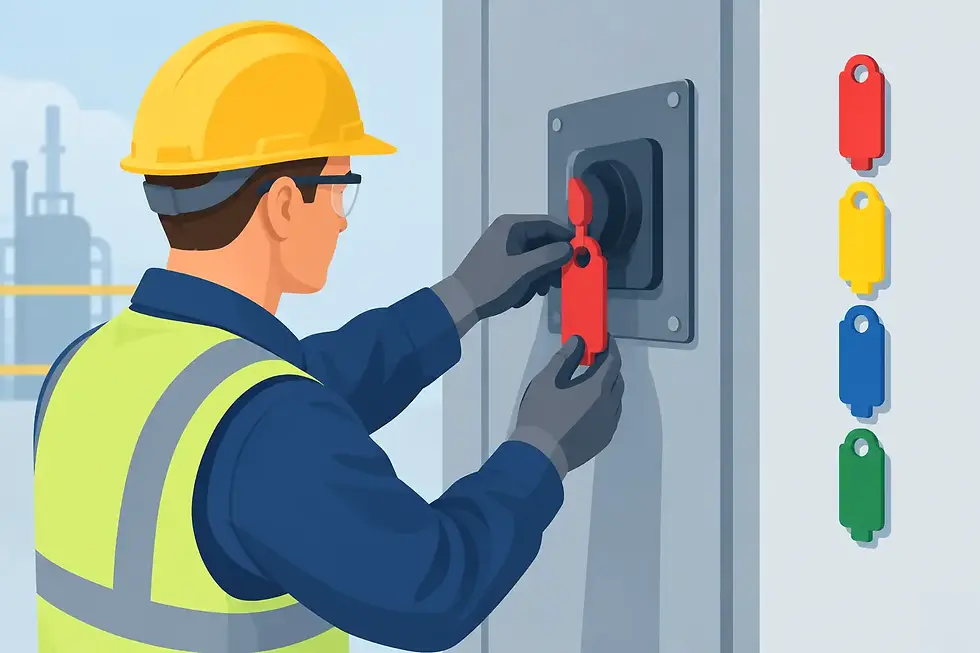
That is why implementation details matter. Durable equipment labels, clear arc flash markings, disconnect labels, voltage markings, and lockout/tagout identifiers all support what employees are taught in class. Training tells people what to do. Field labeling tells them where and how to apply it.
For many organizations, the best results come when training is paired with a review of actual site conditions. That can include walking electrical rooms, reviewing panel and equipment labeling, checking one-line accuracy, and confirming that procedures match how the work is really performed. ZMAC Safety Labels operates in that practical space because compliance is rarely solved by one product or one meeting.
Common gaps that NFPA 70E training should correct
Facilities usually do not fail because they have no safety intent. They fail because the program has blind spots. Sometimes qualified workers are never formally evaluated on the tasks they perform. Sometimes labels are installed, but no one explains how to interpret them. In other cases, supervisors expect energized troubleshooting without understanding the permit and justification requirements.
Another frequent gap is overreliance on PPE. PPE is necessary, but it is not the first control. Training should reinforce the hierarchy of risk control methods and the expectation to establish an electrically safe work condition whenever feasible. If the culture treats PPE as permission to work energized, the training has not done its job.
Documentation is another weak point. Employers should be able to show who was trained, on what topics, when the training occurred, and whether the employee demonstrated understanding relevant to assigned duties. For higher-risk roles, that recordkeeping is part of risk management, not office paperwork.
How to evaluate whether your current training is enough
A useful test is to compare your training content to the decisions workers actually make on shift. If your electricians troubleshoot live equipment, can they explain the sequence for shock and arc flash risk assessment? If operators open disconnects or interact with equipment doors, do they know the conditions for normal operation? If contractors perform energized diagnostic work, are they being held to the same program expectations?
You should also ask whether the training reflects the current state of the facility. Outdated one-lines, missing labels, inconsistent equipment identification, and weak lockout/tagout coordination all reduce the value of classroom instruction. Training cannot compensate for poor hazard communication in the field.
The strongest programs are usually the ones that treat training as one control within a larger system. Engineering studies define the hazard. Labels communicate it at the point of use. Procedures establish the required steps. Training makes sure workers can apply all of it under real conditions.
The standard sets expectations, but the employer sets the culture
NFPA 70E provides the framework. The employer decides whether that framework is enforced with enough discipline to protect people. If production pressure routinely overrides de-energization, if labels are missing from replacement equipment, or if refresher training gets delayed until after an incident, the problem is not the standard. The problem is implementation.
A serious electrical safety culture does not treat training as an annual event. It treats it as part of how work is planned, authorized, labeled, reviewed, and improved. That takes effort, and it sometimes means slowing a job down. But when the alternative is a shock injury, arc flash burn, equipment damage, or a fatality, slowing down is not the expensive option.
The useful question is not whether your team attended nfpa 70e electrical safety training. It is whether they can apply it correctly at the panel, at the disconnect, and under pressure when the safest choice is not the fastest one.


Comments