

What Is Arc Flash Hazard at Work?

A worker opens a panel for what should be a routine task, and in a fraction of a second the job turns into a medical emergency. That is why the question what is arc flash hazard is not academic for facilities, contractors, and safety teams. It is a practical issue tied to incident energy, equipment condition, work practices, and whether people are given clear hazard information before they interact with energized equipment.
Arc flash hazard refers to the danger created when an electric arc releases intense heat, pressure, sound, and molten metal. The event can produce temperatures high enough to cause severe burns, ignite clothing, damage hearing, and create a blast force that throws a worker backward. In many facilities, the hazard is present anywhere energized electrical equipment can fault under the right conditions, including switchboards, panelboards, motor control centers, industrial control panels, and other distribution equipment.
What is arc flash hazard in practical terms?
In practical terms, an arc flash hazard exists when a person could be exposed to the thermal effects of an arcing fault. That exposure is often measured as incident energy, typically in calories per square centimeter, at a specified working distance. The higher the available fault current, clearing time, or system configuration risk, the more severe the potential exposure may be.
This matters because the hazard is not defined only by voltage. A lower-voltage system can still present a serious arc flash risk if fault current is high and overcurrent protection does not clear quickly. On the other hand, some equipment may present lower exposure depending on system design, protective device settings, and maintenance condition. That is one reason blanket assumptions are dangerous.
An arc flash hazard is also different from electrical shock hazard, even though the two often exist together. Shock hazard involves current passing through the body from contact with energized parts. Arc flash involves the energy released by an electrical arc. A worker may face one or both hazards at the same piece of equipment, which is why field decisions have to consider boundaries, PPE, and task conditions together.
How an arc flash happens
An arc flash begins when electricity leaves its intended path and travels through air between conductors or from a conductor to ground. Air normally acts as insulation, but if the gap is bridged or the insulation strength breaks down, an arc can form. Once established, that arc can rapidly intensify.
The trigger is not always dramatic. A dropped tool, loose connection, equipment failure, dust buildup, corrosion, animal intrusion, condensation, improper installation, or accidental contact during testing can all initiate an arc. Human error plays a role in many incidents, but equipment age, poor maintenance, and design conditions are just as important.
Clearing time is a major factor in severity. The longer protective devices take to interrupt the fault, the greater the thermal energy released. That is why arc flash studies and protective device coordination matter. They are not paperwork exercises. They directly affect the hazard level workers may face at the equipment.
Why arc flash injuries are so severe
Arc flash incidents combine several injury mechanisms at once. Extreme heat can cause deep burns in less than a second. The pressure wave can damage lungs, rupture eardrums, or propel a person into nearby equipment or structures. Molten metal and shrapnel can create additional trauma, and the intense light can injure eyesight.
Clothing becomes part of the outcome. Non-arc-rated materials may ignite or continue burning, increasing injury severity. Even when the worker survives, recovery can involve surgeries, long rehabilitation, and permanent limitations. For employers, the event can also trigger OSHA scrutiny, equipment damage, downtime, and significant liability exposure.
Where arc flash hazards are commonly found
Arc flash hazards are most commonly associated with energized electrical equipment used for power distribution and control. That includes service entrance gear, switchgear, switchboards, panelboards, MCCs, transformers, disconnects, meter sockets, UPS systems, battery systems, and industrial control assemblies.
The hazard is especially relevant during tasks that place a worker near exposed energized parts or increase the chance of initiating a fault. Removing covers, opening compartments, voltage testing, infrared inspection under certain conditions, troubleshooting, racking breakers, and performing justified energized work all require careful hazard evaluation.
It also depends on equipment condition. A well-maintained system with current study data and properly set protective devices is not the same as aging gear with missing labels, undocumented modifications, and unknown maintenance history. Facilities often underestimate how much conditions change over time.
What standards expect employers to do
NFPA 70E is central to how US employers evaluate and communicate arc flash risk in the workplace. It requires an arc flash risk assessment to determine if an arc flash hazard exists, estimate the likelihood and severity of injury, and identify protective measures. OSHA does not publish a standalone arc flash standard in the same way, but its electrical safety requirements and General Duty Clause still create real employer obligations when recognized hazards are present.
For most organizations, compliance means more than handing out PPE. It means establishing an electrical safety program, identifying equipment that requires field marking, maintaining up-to-date study information, training qualified persons, and controlling when energized work is permitted. The details matter because a label without engineering support, or PPE without task planning, does not create a defensible safety program.
The role of equipment labels
Arc flash labels are one of the most visible parts of hazard communication. They help workers identify key information at the point of use before opening equipment or beginning a task. Depending on the method used and the study results, labels may show nominal system voltage, arc flash boundary, incident energy at a working distance, minimum arc rating of clothing, site-specific PPE requirements, and shock approach information.
The label is not a substitute for training or judgment. It is a field communication tool that supports safer decisions. It also has to remain legible in actual service conditions. In industrial environments, labels are exposed to heat, dirt, washdown, chemicals, UV, and abrasion. If the marking degrades, peels, or becomes unreadable, the hazard communication breaks down right where the worker needs it.
How arc flash hazard is evaluated
The best answer to what is arc flash hazard at a specific piece of equipment comes from a formal assessment, not guesswork. In many facilities, this starts with collecting system data, building or updating a one-line model, verifying protective device information, and performing an engineering study using accepted methods.
That process evaluates fault current, equipment type, protective device clearing time, working distance, and system configuration. From there, the employer can determine incident energy levels or other permitted label information and define boundaries and PPE requirements. If the results show unusually high exposure, that should trigger a deeper review of mitigation options rather than acceptance of the status quo.
This is where facilities often run into an it depends situation. Two panels that appear similar may have very different hazard levels because of upstream device settings, transformer size, available fault current, or system modifications over time. Treating all equipment the same may simplify administration, but it can lead to overprotection in some places and underprotection in others.
Reducing arc flash risk
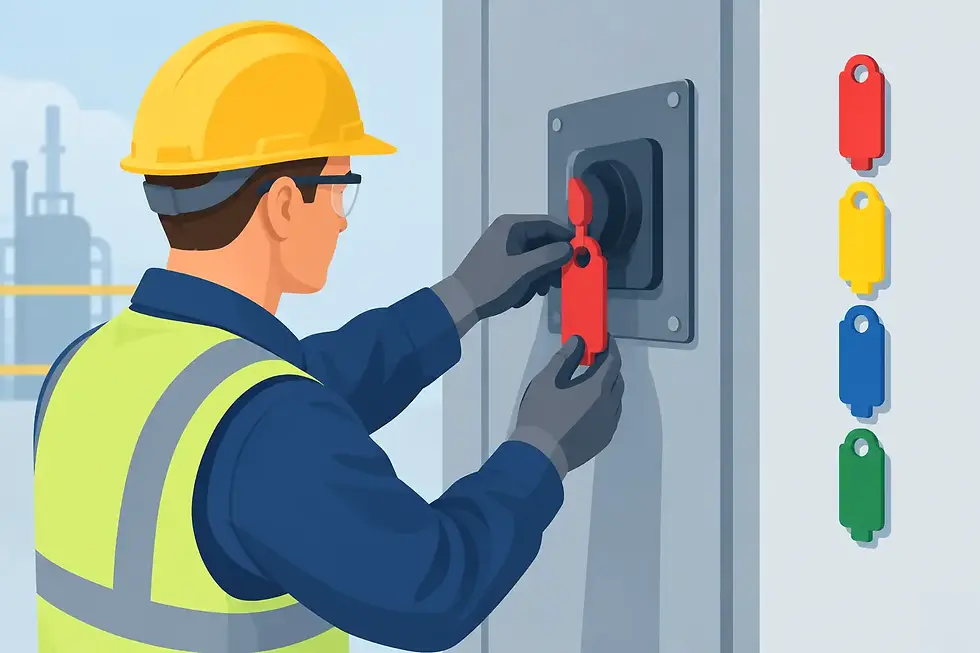
Risk reduction starts with the strongest control measures, not the last line of defense. De-energizing equipment and establishing an electrically safe work condition is generally the most effective way to protect workers. If the equipment can be turned off, isolated, locked out, tagged out, and verified, the arc flash exposure tied to energized work is dramatically reduced.
When energized work is justified, facilities need layered controls. That includes current arc flash study data, accurate field labels, defined work procedures, qualified personnel, proper tools, shock protection measures, and task-appropriate arc-rated PPE. Equipment maintenance also matters because neglected protective devices may not operate as expected during a fault.
Engineering improvements can reduce exposure in some cases. Faster protective settings, differential protection, arc-resistant equipment, remote racking, maintenance switches, zone-selective interlocking, or equipment replacement may lower incident energy or remove workers from the highest-risk position. The right option depends on system design, budget, uptime needs, and the actual hazard level.
Common mistakes that increase exposure
One common mistake is relying on old study data after system changes. Added loads, replaced transformers, altered breaker settings, or expansion projects can change fault levels and invalidates assumptions. Another is treating labels as permanent regardless of revisions in the electrical system.
Facilities also get into trouble when unqualified persons are exposed to equipment they should not access, or when qualified workers are not given current training on boundaries, PPE selection, and energized work requirements. In some cases, the program exists on paper, but field execution is inconsistent. That gap is where incidents happen.
ZMAC Safety Labels works in the part of the process many organizations struggle with most - turning study results and compliance requirements into durable, usable field communication that supports real-world electrical safety programs.
Why this matters to operations, not just safety
Arc flash prevention is often framed as a worker protection issue, and that is exactly what it is. But for plant managers and facility leaders, it is also an operational control issue. A serious electrical incident can disable critical equipment, interrupt production, damage assets, delay customer commitments, and expose the organization to investigations and claims.
That is why strong programs tend to combine engineering, labeling, training, and maintenance rather than relying on any one element. Compliance is part of the picture, but so is continuity. Clear hazard information at the equipment helps people make better decisions under pressure, especially during troubleshooting, outages, and maintenance windows.
If you are asking what is arc flash hazard, the useful answer is this: it is a preventable exposure tied to energized electrical work, and the quality of your assessment, labeling, and field execution will determine whether workers face that exposure blindly or with the information they need to go home safely.


Comments